
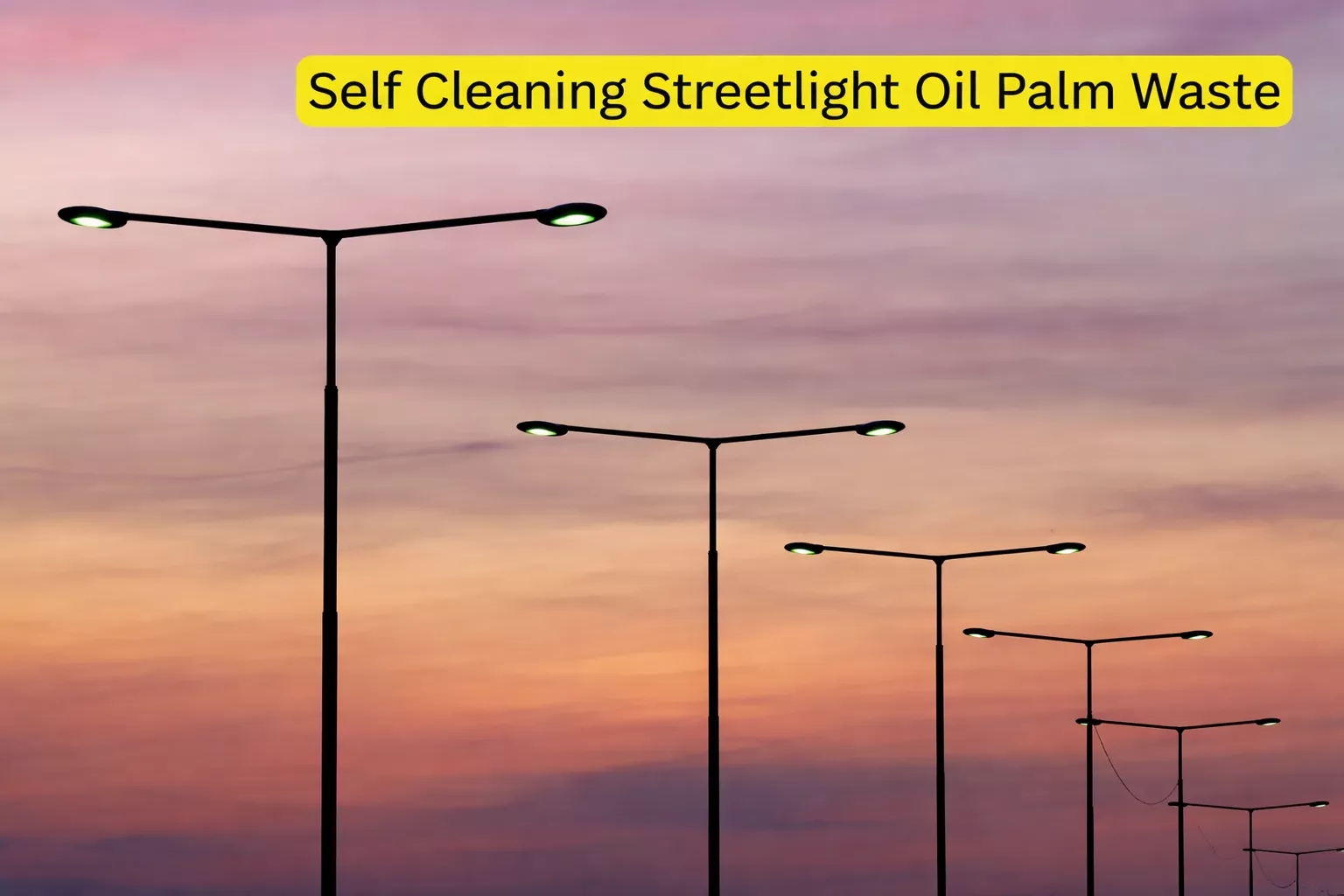
Streetlights are such a normal part of daily life that we rarely stop to think about them. We walk beneath them, drive past them, and rely on them for safety after dark. When they function properly, they blend into the background. But when they stop working, poor visibility quickly becomes a problem for everyone.
Over time, streetlights naturally collect dust, dirt, insect residue, and air pollution. This buildup gradually reduces brightness and efficiency. To maintain proper lighting, cities must regularly send maintenance crews to clean and repair fixtures—an ongoing expense that adds up quickly. Meanwhile, agricultural byproducts like oil palm waste continue to accumulate, often with limited sustainable applications.
The concept of self cleaning streetlight oil palm waste brings these two challenges together into one thoughtful solution. Rather than viewing maintenance and waste management as separate issues, this approach combines innovative streetlight design with recycled oil palm materials to create fixtures that stay cleaner for longer and reduce overall upkeep.
In this article, we’ll break down how self cleaning streetlight oil palm waste systems function, why they’re important for both cities and the environment, and how they can realistically fit into modern urban planning. The focus will remain practical and straightforward—explaining the benefits clearly, without exaggeration.
Why Streetlight Maintenance Is a Bigger Issue Than It Looks
Streetlights run every single night, through heat, rain, dust, and pollution. Over time, layers of grime build up on their surfaces. Even if the bulb itself is working perfectly, the light can appear weaker simply because dirt blocks part of the output.
To deal with this, city authorities schedule regular maintenance. But cleaning a streetlight is not as simple as wiping down a window.
Common challenges include:
- Traffic disruptions during service work
- Safety risks for crews operating lifts and cranes
- Fuel costs for maintenance vehicles
- Delays due to bad weather or limited staff
Because of these factors, cleaning schedules often fall behind. When that happens, lighting quality drops, and public safety and satisfaction can suffer.
This is why many cities are searching for smarter, lower-maintenance alternatives.
What “Self-Cleaning Streetlight” Really Means
A self-cleaning streetlight is not maintenance-free, and it is not futuristic magic. It simply reduces how often manual cleaning is required.
Most self-cleaning designs rely on:
- Special surface coatings that repel dust and water
- Materials that make it harder for dirt to stick
- Shapes that allow rainwater to naturally wash away debris
As a result, the light stays clearer for longer periods. Maintenance still happens—but less often.
When this concept is paired with sustainable materials, the impact becomes even stronger.
Oil Palm Waste Explained Simply
Oil palm trees are cultivated widely for palm oil production. During harvesting and processing, large amounts of leftover material are generated, such as:
- Empty fruit bunches
- Fibers
- Shells
Traditionally, this waste has been burned, left to decompose, or sent to landfills. These methods can lead to air pollution, land use strain, and wasted resources.
Over time, researchers discovered that oil palm waste contains strong natural fibers. When processed correctly, these fibers can be transformed into durable composite materials.
That discovery led to new possibilities—including self cleaning streetlight oil palm waste applications.
How Oil Palm Waste Becomes Streetlight Material
Oil palm waste is not used in raw form. It undergoes treatment and processing to improve strength, durability, and weather resistance.
After processing, it can be shaped into:
- Composite panels
- Structural casings
- Pole coverings
- Protective outer housings
This allows self cleaning streetlight oil palm waste designs to reduce reliance on conventional plastics or metals. In many cases, these composites are also lighter, making installation and handling easier.
Why Combine Self-Cleaning Design With Oil Palm Waste?
Each idea provides benefits on its own. Together, they create a more efficient and sustainable solution.
Key combined advantages:
- Reduced cleaning frequency
- Lower environmental impact
- Productive reuse of agricultural waste
- Longer-lasting surface clarity
Instead of redesigning the entire lighting system, self cleaning streetlight oil palm waste improves existing infrastructure in a practical way.
A Simple Real-World Scenario
Imagine a streetlight along a busy road.
Normally, dust from passing vehicles settles on its housing. Over time, the light becomes duller. Workers must eventually clean it.
Now picture a self cleaning streetlight oil palm waste version. Its outer surface resists dust buildup. When it rains, water flows smoothly across the housing and washes debris away.
Multiply that effect across hundreds or thousands of streetlights, and the difference becomes significant.
Long-Term Environmental Benefits
Sustainability works best when multiple improvements happen at once.
Using oil palm waste helps reduce:
- Open burning of agricultural byproducts
- Landfill use
- Emissions tied to waste disposal
Self-cleaning features help reduce:
- Fuel consumption from maintenance vehicles
- Water usage
- Dependence on chemical cleaning agents
Together, self cleaning streetlight oil palm waste systems lower the hidden environmental costs of urban lighting.
Financial Benefits for Cities
Municipal budgets are often tight. Any new system must justify its cost.
Although sustainable materials may have higher upfront costs, long-term savings often make the difference.
Potential savings include:
- Fewer cleaning operations
- Reduced labor expenses
- Lower equipment and fuel usage
- Extended component lifespan
Over time, self cleaning streetlight oil palm waste solutions can become more cost-effective than traditional systems.
Addressing Durability and Safety
A common concern is whether oil palm–based materials can handle outdoor conditions.
When processed properly, these composites are tested for:
- Heat resistance
- Moisture and rain tolerance
- Structural strength
With correct engineering standards, self cleaning streetlight oil palm waste components can meet safety and durability requirements for public infrastructure.
Supporting Local Economies
In regions where palm oil is produced, oil palm waste is locally available. Using it in infrastructure can:
- Reduce transportation costs
- Create jobs in processing and manufacturing
- Add value to materials that would otherwise be discarded
Instead of exporting waste or disposing of it, communities can turn it into useful products. This strengthens local economic cycles.
Challenges to Overcome
No innovation is without obstacles. Some challenges include:
- Initial investment costs
- Need for trained engineers and designers
- Limited awareness among city planners
However, as more pilot projects demonstrate success, adoption becomes easier. Infrastructure improvements usually expand gradually, not overnight.
Role in Modern Urban Planning
Today’s cities aim to be resilient, efficient, and environmentally responsible. Street lighting plays a key role in safety and public life.
Self cleaning streetlight oil palm waste aligns with modern planning goals by:
- Lowering maintenance demands
- Reusing renewable materials
- Improving lighting consistency
It is not about complexity—it is about smarter design choices.
Is This Limited to Palm-Producing Regions?
Oil palm waste is most readily available in tropical regions. However, the broader concept can be adapted.
Other agricultural byproducts could be used in similar composite materials. Still, where palm oil production exists, self cleaning streetlight oil palm waste is particularly practical because the raw material is already abundant.
Direct Benefits for Communities
At the street level, the results are straightforward.
Cleaner streetlights mean:
- Better nighttime visibility
- Safer roads and sidewalks
- More dependable public spaces
When infrastructure works consistently, communities benefit—even if the technology behind it remains unnoticed.
Looking Ahead
Future improvements could include:
- Advanced dirt-repelling coatings
- Stronger and lighter composite blends
- Integration with solar-powered systems
As these technologies mature, self cleaning streetlight oil palm waste may shift from being an innovative option to a standard feature.
Final Thoughts
The idea behind self cleaning streetlight oil palm waste is grounded in practicality. It tackles two ongoing challenges—maintenance costs and agricultural waste—through one integrated solution.
By reducing cleaning needs, reusing natural byproducts, and improving lighting reliability, this approach delivers steady, long-term value.
Sometimes the most meaningful innovations are not dramatic or flashy. They simply make everyday life a little cleaner, safer, and more efficient—one streetlight at a time.
You May Also Like This
- Your Topics | Multiple Stories: A Fresh Way to Share What Matters
- Florida Woman Wins Monopoly Lottery: A Life-Changing Win
- CRACKSTUBE: THE HIDDEN GEM FOR FREE VIDEO STREAMING YOU NEED TO SEE
- Walmart Anti Money Laundering CBL Answers: A Clear Guide
- Illinois Public Act 101-0038 Task Force: What It Is, Why It Matters
